
How We Close & Winterize Your Inground Pool
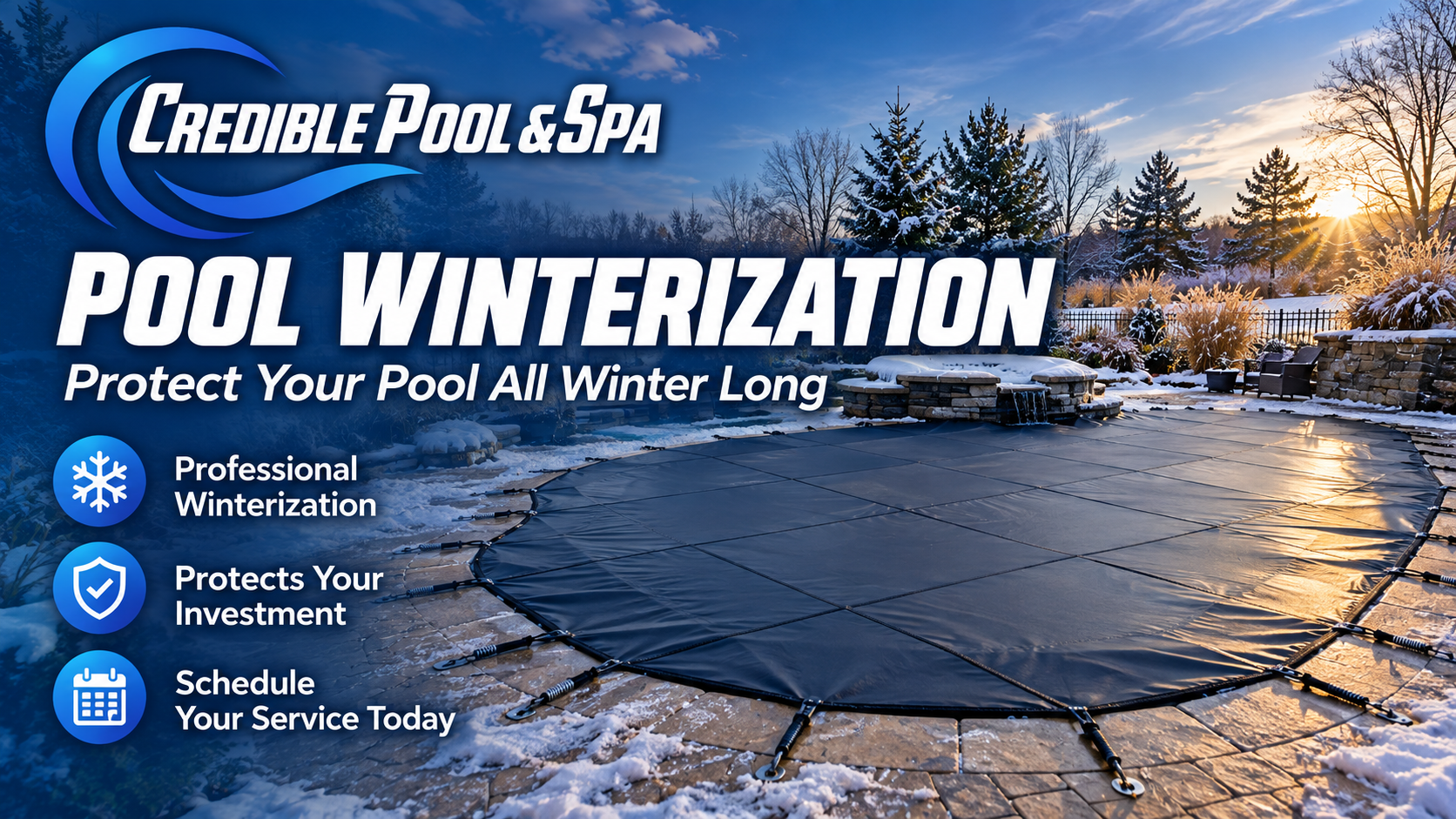
Closing an inground pool has exactly one job: make sure no water is left anywhere it can freeze, expand, and crack something. There is more than one way to get there — and if you have owned a pool before, or came to us from another company, our method may look different from what you are used to. That is okay. Here is exactly what we do, why we do it this way, and why it fully protects your investment. (This page covers our inground pool closings.)
How We Winterize — Step by Step
- We lower the water to the correct level for your pool and cover.
- We blow out every plumbing line with compressed air through the skimmer, then plug all the lines (skimmer and returns) so no water can sit in the pipes over the winter.
- We add pool-grade antifreeze to the lines as a backup barrier against any last trace of moisture.
- We open the drain plugs on your equipment — pump, filter, and heater — so any water inside drains out completely and has nothing left to freeze.
- Any plumbing above the waterline drains back down to water level on its own (water finds its level) — and anything that could trap water is cleared by the air blow-out and sealed off with plugs.
- We install your safety cover.
When we are finished, there is no standing water left anywhere the cold can reach it.
A Word on Winter Chemicals: Less Is More
A properly balanced pool needs very little to make it through winter — we don’t dump a cabinet of chemicals into your water. We recommend your pool be balanced, shocked, and the pump run for about 24 hours before your closing date, so it goes under the cover clean and clear. If you’d like an algaecide, just ask — we add one on request. Balanced water beats a pile of chemicals every time.
Why We Don’t Take Everything Apart and Store It in a Shed
You may have had a company — or an older, now-retired owner — who pulled the pump, filter, heater, and chlorinator apart every fall and carried them off to a garage or shed. That method is not wrong for its era, but it is not safer, and here is the honest reason why.
Every time equipment is disconnected and reconnected, you introduce wear and new risk — cross-threaded fittings, stripped unions, cracked plastic from handling, fresh leak points, and the classic missing or mismatched part come spring. Taking it apart does not remove the freeze risk; it just trades it for handling risk.
Modern pool equipment is designed to spend the winter right where it sits. Draining it through its own drain plugs and clearing the lines protects it every bit as well as a full teardown — with far less to go wrong. Less handling means fewer failure points, a cleaner and faster spring opening, and your automation and valve settings stay exactly where they belong.
The Simple Science of Freeze Protection
Freeze damage happens for one reason: water gets trapped somewhere, freezes, and expands with enough force to split pipes and crack equipment. Our closing removes trapped water four different ways:
- Compressed air and line plugs clear and seal the plumbing
- Antifreeze backs up the lines against any residual moisture
- Open drain plugs empty the pump, filter, and heater
- Gravity drains the plumbing above the waterline back down to the pool
No trapped water means nothing to freeze — and nothing to crack.
We Stand Behind Every Closing
Here is the part that matters most: we take full responsibility for the winterization we perform. Freeze damage is unmistakable and easy to diagnose — if we open your pool in the spring and find something that failed because of how we closed it, we own it and we make it right. That is our commitment to you.
You do not have to be an expert in every valve and plug. You just have to know that the people closing your pool do this hundreds of times a season, use a proven modern method, and stand behind the results. Trust the process — and hold us to it.
Everything Is Documented
We photograph and note the condition of your pool and equipment at every closing. If a question ever comes up — at spring opening or down the road — we can look back at exactly how your pool was left and sort it out fast, without guesswork. It keeps us accountable, and it protects you.
Old-School Teardown vs. The Credible Method
| Old-School Teardown | The Credible Method | |
|---|---|---|
| Freeze protection | Yes | Yes |
| Added wear every year | High — constant disconnect/reconnect | Minimal |
| New leak points & lost parts | Common | Rare |
| Automation & valves stay set | No — reconfigured each spring | Yes |
| Spring opening | Slower, more surprises | Faster, cleaner |
Ready to Close Your Pool the Right Way?
Get on our winterization schedule, or pair your closing with a mesh safety cover and a weekly maintenance plan for the easiest spring opening possible.